





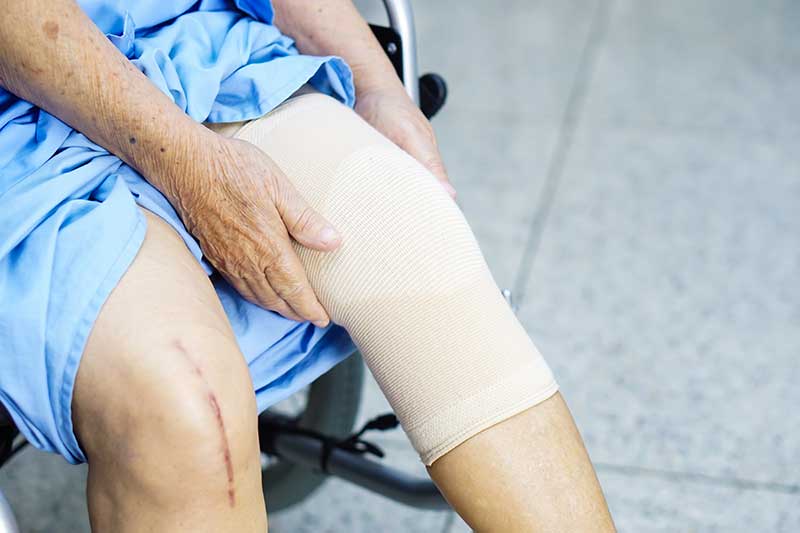
A knee fracture is a break in one of the bones that make up the knee — usually the kneecap, the lower thighbone, or the top of the shinbone. It rarely takes much. A hard fall, a road accident, a bad landing on the field, or in older adults, sometimes just a routine slip. Treatment depends entirely on how bad the break is. Some fractures heal fine with a brace and time. Others need surgery to put things back in place. Getting it looked at early changes how the knee ends up functioning.
What Is Knee Bone Fracture Treatment?
Treatment starts with figuring out what’s broken, usually through X-rays or a CT scan. From there it splits two ways — bracing and rest for stable fractures, surgery for anything displaced or complex. Either path is followed by rehab, since the bone healing is only half the job. Getting strength and movement back takes real, structured work afterward.
What Is a Knee Bone Fracture?
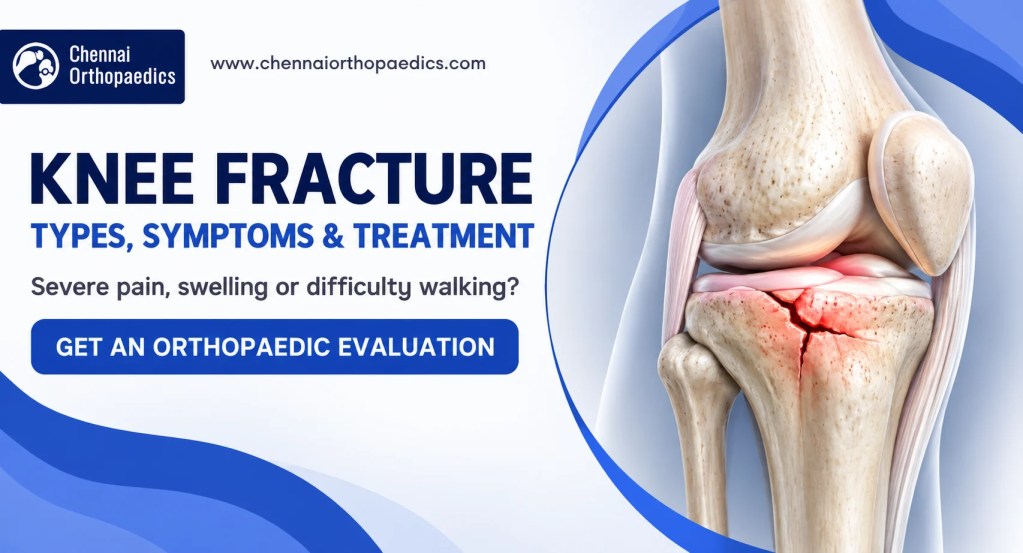
Three bones meet at the knee the patella, the distal femur, and the tibial plateau. A fracture means one of them has cracked or broken, and how serious that is comes down to location, whether it’s shifted out of place, and whether the skin’s been broken too. Some fractures are barely more than a hairline crack. Others shatter the bone into pieces and need far more involved care.
Types of Knee Fractures
Patella Fracture Treatment
Usually caused by a direct hit falling straight onto the knee, or the impact of a car accident. Pain hits fast, swelling follows, and straightening the leg becomes genuinely hard. An X-ray confirms it. If the pieces haven’t shifted, a brace often does the job. If they have, surgery realigns and secures things. Recovery runs anywhere from a few weeks to a few months.
Tibial Plateau Fracture Treatment
This affects the top of the shinbone, right at the joint. High-impact trauma is the usual cause — accidents, falls from height, heavy direct force. Severity varies a lot here, from a simple crack to a break that caves the bone surface in. Treatment follows suit, from bracing on the mild end to surgical fixation when the joint surface itself is disrupted.
Distal Femur Fracture Treatment
This one involves the lower thighbone, just above the knee. Significant trauma is the typical cause, though older patients with weaker bone can fracture it from far less. Imaging maps out how the break runs. Surgery is common here, since this area carries real weight and needs to heal aligned properly to avoid long term joint issues.
Knee Fracture Symptoms
Sharp, severe pain. Swelling that comes on fast. Bruising, often visible. Walking becomes hard, sometimes impossible. Many can’t straighten the knee at all. More serious breaks can bring visible deformity, a locking feeling, or a knee that just doesn’t feel stable under weight.
What Causes a Knee Fracture?
Road accidents top the list, given the forces involved. Falls come next, especially for older adults. Sports injuries account for a good share too, particularly anything involving sudden impact. Osteoporosis weakens bone enough that minor trauma can fracture it, and any hard, direct blow to the knee carries risk regardless of age.
Risk Factors for Knee Bone Fractures
Bone density drops with age, so older adults face more risk. Athletes take on risk through repeated impact. Anyone with weaker bones, prior fractures, or osteoporosis is more vulnerable sometimes to falls that wouldn’t otherwise cause any damage.
Knee Fracture Diagnosis
It starts with a physical exam checking swelling, tenderness, movement, how the knee handles weight. An X-ray usually confirms the fracture from there. For more detail, especially with complex breaks, a CT scan or MRI often follows. A bone scan gets used occasionally when other imaging doesn’t tell the full story.
Knee Bone Fracture Treatment Options
Treatment isn’t uniform. It depends on which bone broke, how displaced it is, and the patient’s overall health.
Non-Surgical Knee Fracture Treatment
Stable, non-displaced fractures often just need a brace or cast to hold things in place while healing happens. Rest, ice for the swelling, pain medication, and modified activity round out the rest.
Knee Fracture Surgery
More complex breaks usually need fixation — ORIF, where plates and screws hold the bone in position, is common. Pins or tension band wiring show up in certain patella fractures. If bone’s been lost or badly fragmented, grafting may be added to support healing.
Can a Knee Fracture Heal Without Surgery?
Often, yes. Stable fractures, hairline cracks, and breaks that haven’t shifted out of alignment tend to heal well with bracing alone. Surgery becomes necessary mainly when fragments have moved, the joint surface itself is affected, or the fracture has broken through the skin.
Recovery After Knee Fracture Surgery
Recovery moves in stages. Week one is mostly about pain control and protecting the knee. Weeks two through four bring early, guided movement. By week six, weight-bearing usually starts progressing. At three months, most patients are walking with far more confidence. By six months, many are close to normal activity though this varies a lot depending on how bad the break was and how the body responds.
Knee Fracture Rehabilitation Guide
This is where the real work happens. Weight-bearing gets introduced gradually so the healing bone isn’t stressed too soon. Physiotherapy rebuilds muscle strength around the knee, restores range of motion, and retrains balance. Walking comes first, stair climbing follows as strength improves. Returning to work depends on the job itself, and sports take longer still, since that demands the knee handle much higher stress reliably.
Possible Complications of an Untreated Knee Fracture
Skip treatment, or under-treat it, and the risks stack up. Arthritis can set into the joint over time. Chronic pain and stiffness can become permanent. Bones can heal crooked (malunion) or fail to heal at all (nonunion), both hurting long-term function. Mobility tends to suffer, and open fractures carry real infection risk without proper care early on.
Knee Fracture Prevention Tips
Regular exercise keeps bones and the muscles supporting them strong. Bone health matters on its own too enough calcium, enough vitamin D, and some awareness of density as the years go on. Fall prevention at home helps older adults specifically. Athletes benefit from proper protective gear during high-impact sports.
Foods That Help Bone Fracture Healing
Healing bone needs the right materials. Protein supports tissue repair broadly. Calcium and vitamin D drive bone formation directly. Vitamin C supports the collagen bone needs to rebuild. Zinc and magnesium play supporting roles, and staying hydrated helps the whole process along.
Why Choose Dr. Bharani Kumar for Knee Fracture Treatment in Chennai?
A cast alone isn’t always the answer for a knee fracture. What actually matters is having someone who can look at the break, judge how serious it really is, and choose the right path from there not just default to the same approach for every case. Dr. Bharani Kumar at Chennai Orthopaedics has spent years handling trauma and fracture cases, and works with diagnostic tools that make timely, accurate decisions possible. Every plan gets built around the specific fracture sometimes surgical, sometimes not, sometimes a bit of both and rehab support carries through to the end.
Knee Fracture Treatment FAQs
What is a knee fracture?
A break in one of the bones that make up the knee the kneecap, lower femur, or upper tibia. Can be as minor as a hairline crack or as serious as a complex, displaced break.
What causes a knee fracture?
Road accidents, falls, sports injuries, a direct hit to the knee, or bone weakened by osteoporosis the last of which means even a small impact can cause a fracture.
What are the symptoms of a fractured knee?
Sharp pain, swelling, bruising, trouble walking or straightening the leg. Sometimes there’s visible deformity, or the knee just feels unstable or like it’s locking up.
Can I walk with a knee fracture?
Depends how bad it is. Some stable fractures still allow a bit of weight-bearing; more serious ones make walking difficult, even risky, until treated.
Is knee fracture surgery always necessary?
No. Plenty of stable fractures heal fine with a brace and rest. Surgery comes into play mainly when the bone’s shifted or the joint surface itself is damaged.
Which fractures heal without surgery?
Hairline fractures and stable, non-displaced ones usually heal on their own with the right bracing and activity limits.
How is a knee fracture diagnosed?
Starts with a physical exam, then an X-ray. A CT or MRI might follow for more complicated fractures or to check soft tissue.
What Is the Recovery Time for Knee Fractures?
Depends on the fracture and how it’s treated could be a few weeks for something minor, or several months if surgery was involved.
When can I climb stairs after knee fracture surgery?
Gradually, as part of rehab, once the doctor’s cleared weight-bearing.
When Can I Drive After Knee Fracture Surgery?
Once the knee’s got enough strength and control to brake safely this gets judged case by case.
When can I return to sports?
Later in recovery, once the knee can actually take higher-impact stress without issue. Depends a lot on how severe the fracture was and how rehab’s going.
What foods help Knee fracture healing?
Protein, calcium, vitamin D, vitamin C, zinc, magnesium — and just staying hydrated.
Is Physiotherapy Necessary for Knee Fractures?
Yes, almost always. It’s what rebuilds strength, motion, and stability, and it matters a lot for how things turn out long term.
What happens if a knee fracture is left untreated?
Arthritis, chronic pain, stiffness, bone that heals wrong, reduced mobility — and if it’s an open fracture, a real risk of infection.
How much does knee fracture treatment cost in Chennai?
Depends on how severe it is, whether surgery’s needed, and the treatment plan overall — best to ask directly during consultation.
Which doctor treats knee fractures?
Orthopaedic specialists with trauma and fracture experience — Dr. Bharani Kumar at Chennai Orthopaedics is one.
Is knee fracture surgery painful?
Not during the procedure — that’s done under anaesthesia. Some soreness afterward is normal and gets managed with medication.
Book an Appointment for Knee Bone Fracture Treatment in Chennai
Don’t wait this one out. Early diagnosis and the right treatment plan make a real difference in how the knee heals and works afterward. Dr. Bharani Kumar at Chennai Orthopaedics offers care that follows through from diagnosis to full rehab. Schedule Your Consultation Today.